
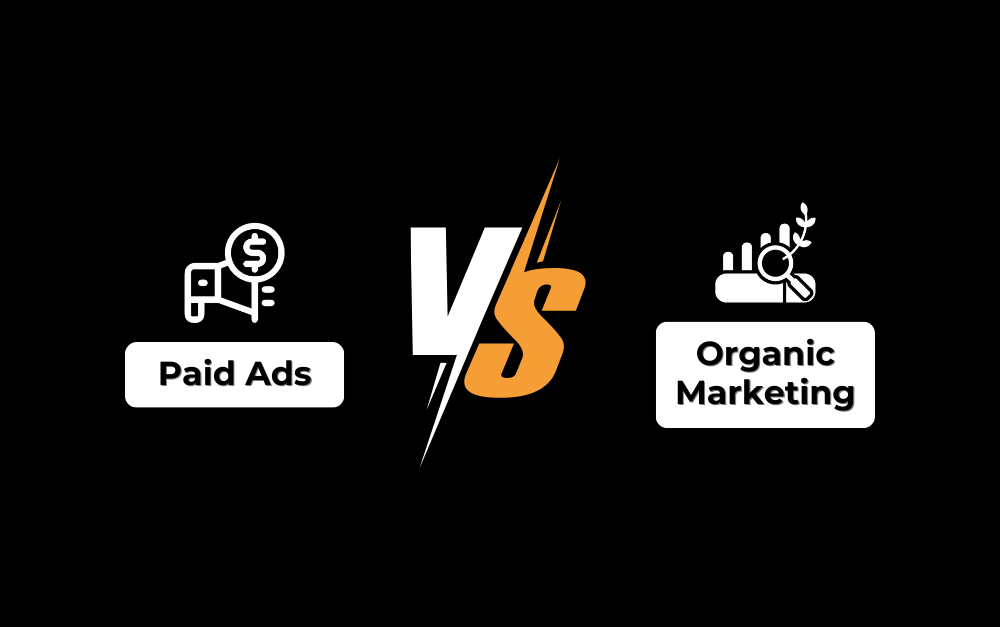
In today’s competitive digital landscape, businesses often face a critical question: Should we invest in paid advertising or focus on organic marketing? Both strategies have unique advantages, costs, and long-term impacts. Choosing the right approach depends on your business goals, budget, industry, and timeline.
In this blog, we’ll break down paid ads vs organic marketing, compare their benefits, and help you decide which strategy—or combination—is best for your business growth.
What is paid advertising?
Paid advertising refers to marketing strategies where businesses pay platforms to promote their products or services to a targeted audience.
Popular paid advertising channels
- Google Ads (Search, Display, Shopping)
- Social media ads (Facebook, Instagram, LinkedIn)
- YouTube video ads
- Sponsored content and native ads
Paid ads offer immediate visibility and fast results when executed correctly.
What is organic marketing?
Common organic marketing methods
- Search Engine Optimization (SEO)
- Content marketing (blogs, videos, guides)
- Social media engagement
- Email marketing
- Brand building and community growth
Key differences between paid ads and organic marketing
3. Speed of Results
- Paid Ads: Instant traffic and leads
- Organic Marketing: Gradual but sustainable growth
If you need quick leads or product launches, paid ads work faster.
2. Cost & Budget Control
- Paid Ads: Requires continuous budget
- Organic Marketing: Lower long-term cost but higher time investment
Organic marketing delivers better ROI over time, while paid ads require ongoing spend.
3. Trust & Credibility
- Paid Ads: Viewed as promotional
- Organic Marketing: Builds stronger credibility
4. Scalability
- Paid Ads: Scales quickly with budget
- Organic Marketing: Scales steadily with content and optimization
5. Long-Term Value
- Paid Ads: Stops when budget stops
- Organic Marketing: Continues delivering results
When paid ads are the right choice?
Best use cases for Paid Ads
- Launching a new product or service
- Running limited-time offers
- Entering competitive markets
- Generating immediate leads or sales
When organic marketing is the right choice?
Best use cases for organic marketing
- Building brand authority
- Long-term growth strategy
- Improving search engine rankings
- Creating educational and valuable content
Businesses focused on sustainability and trust benefit most from organic efforts.
The best strategy: combining paid ads and organic marketing
How a hybrid strategy works?
- Use paid ads for quick traffic and conversions
- Use organic marketing to build long-term visibility
- Retarget organic visitors using paid ads
- Reduce ad dependency over time
This balanced approach maximizes ROI and reduces marketing risk.
Common mistakes businesses make
Avoid these pitfalls,
- Relying only on paid ads without SEO
- Expecting instant results from organic marketing
- Not tracking performance metrics
- Ignoring audience intent and behavior
A data-driven strategy ensures consistent growth.
At Universal Technolabs, we don’t believe in one-size-fits-all marketing. We analyse your business goals, audience, competition, and budget to design a customized marketing strategy that delivers measurable results.
- Paid Ads & PPC Management
- SEO & Content Marketing
- Social Media Marketing
- Website Optimization
- Marketing Automation
Still confused about whether paid ads or organic marketing is right for your business? Let us create a result-driven digital marketing strategy tailored to your goals, budget, and industry.
Contact us today and start turning clicks into customers with a smarter marketing approach.